Daily Bible Readings
Audio & Video Link
Parish Office Closed ~ Monday, October 12th
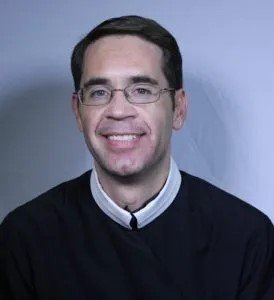
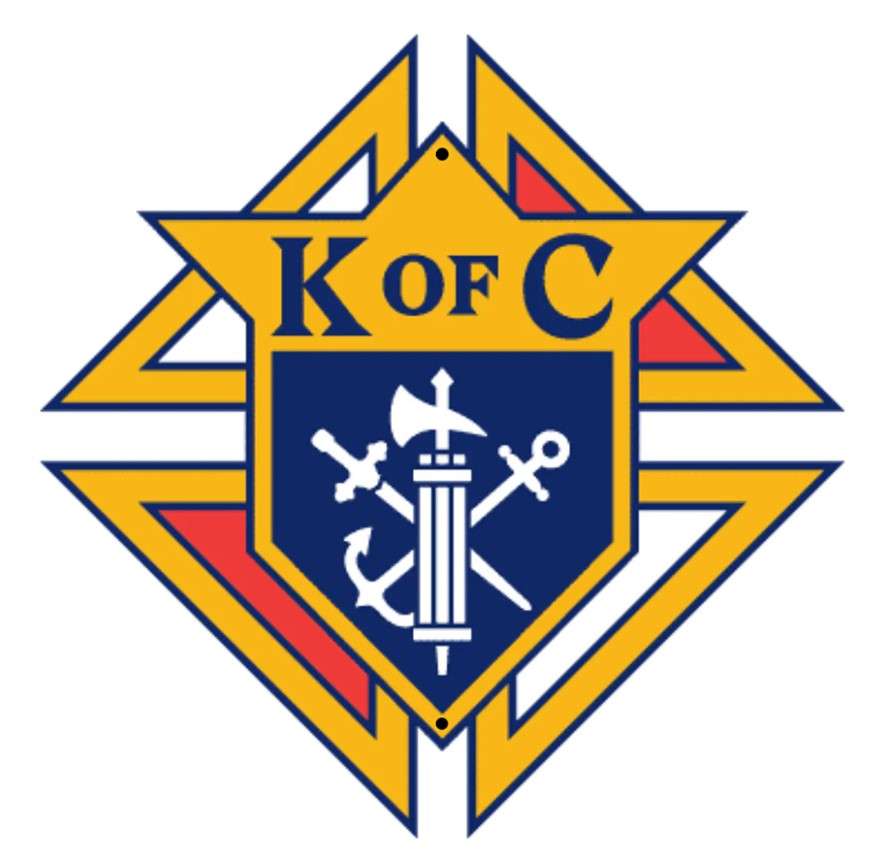
Please welcome Rev. John M. Olenick C.Ss.R. who will be with us to
celebrate Masses and tell us about the work of Unbound, a lay Catholic sponsorship ministry that helps children and elderly in 16 developing countries.
To learn more:
Call (800) 875-6564 or online
celebrate Masses and tell us about the work of Unbound, a lay Catholic sponsorship ministry that helps children and elderly in 16 developing countries.
To learn more:
Call (800) 875-6564 or online

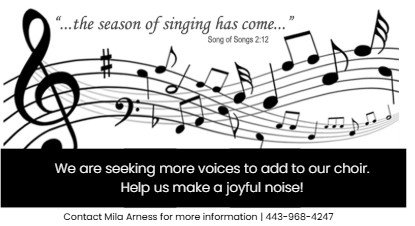
Children/Youth Choir
Tuesdays @ 5 pm ~ Church.
Confirmation students earn volunteer hours by singing:
Sat @ 5 pm | Sun @ 8 am
Tuesdays @ 5 pm ~ Church.
Confirmation students earn volunteer hours by singing:
Sat @ 5 pm | Sun @ 8 am
The next ZOOM Book Club meeting will be Monday, November 16, 7 pm, to discuss The Underground Railroad by Colson Whitehead. Winner of a Pulitzer Prize and the National Book Award for Fiction, this book reimagines the Underground Railroad as an actual secret rail system, carrying Cora, who has escaped from slavery, through several perilous stops on her way north.
Meeting ID: 422 404 7769 Passcode: 437403
Meeting ID: 422 404 7769 Passcode: 437403

Video of the Month Link:
Cardinal McElroy gave a powerful homily on immigration at the Vatican World Day of Migrants and Refugees, starting at minute 35:25.
Preaching on the Parable of the Good Shepherd he said, “One of my scripture professors in the seminary taught us that when you examine a parable of Jesus, look for the character you most dislike, and that is you".

Family Life Center Sports
410-414-9099
- Adult Volleyball
- Monday 7 pm to 10 pm
- Open Gym
- Tuesday 6 pm to 10 pm
- Adult Pickleball
- Tuesday & Thursday 10 am to Noon
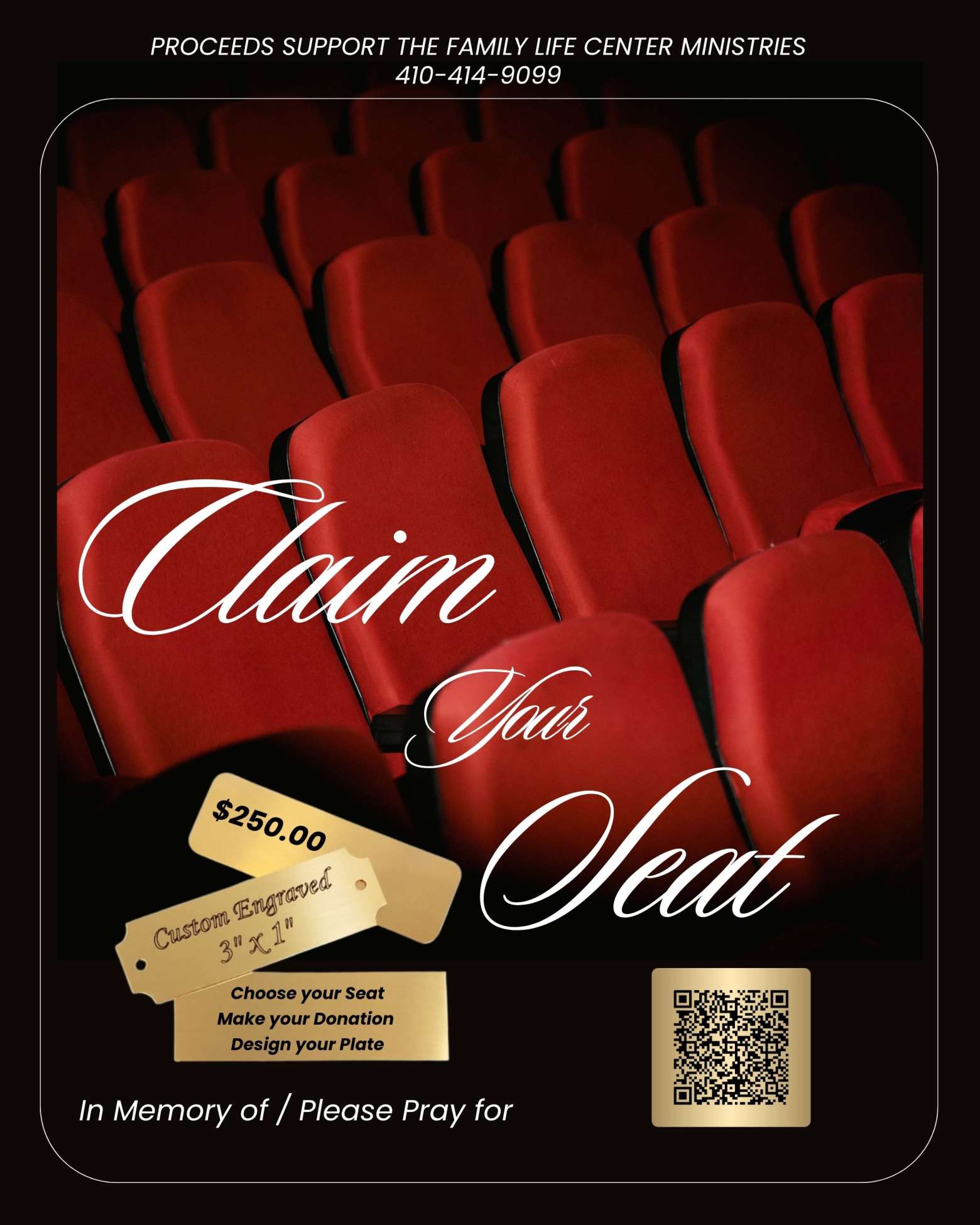
THEATER SEAT PLAQUES
Theater seat memorials will be available in November and December at 1st Sunday Breakfast or in the Festival Room! Make a donation of $250.00 for a plaque to be put on your seat “in memory of, pray for, or in honor of” a special person or family. Any questions, please call Sandy at 410-586-0624.
Theater seat memorials will be available in November and December at 1st Sunday Breakfast or in the Festival Room! Make a donation of $250.00 for a plaque to be put on your seat “in memory of, pray for, or in honor of” a special person or family. Any questions, please call Sandy at 410-586-0624.
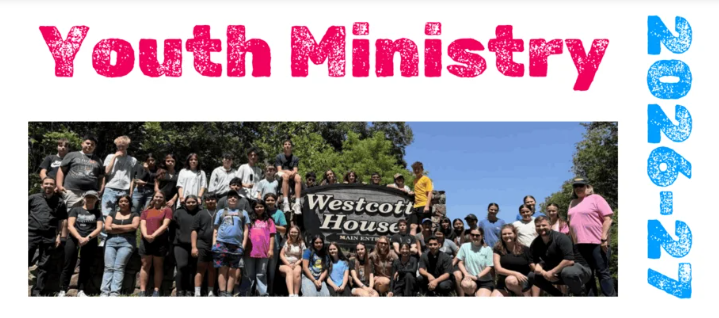
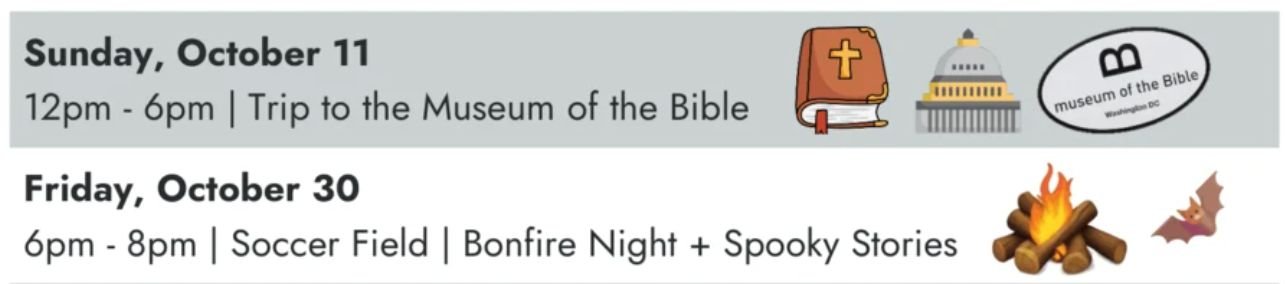
~ Tap picture to see all the cool events planned for our youth this coming year~
Please use separate checks for restricted food pantry funds & other giving.
866-930-4774
Finance FACTS...
The least cost to our parish is processing cash, checks, then using ACH versus a credit card payment.
However, when you cover the admin fee, for e-giving it squashes the cost so that is a win-win!
Thank you for your generosity.
The least cost to our parish is processing cash, checks, then using ACH versus a credit card payment.
However, when you cover the admin fee, for e-giving it squashes the cost so that is a win-win!
Thank you for your generosity.
Tithe via TEXT
410-907-7950
to bless
St. John Vianney

Coming Soon...Tap to Pay for upcoming events!
1 - 7:00 pm, Officers Planning meeting, online
7 - 7:30 pm, Council Membership meeting, Columbus Room - Note the date
15 - 7:30 pm, Lord Baltimore Assembly meeting, Columbus Room
21 - 7:00 pm, McNamara Chapter Crab and Shrimp dinner, St Anthony's
24-25 - After all Masses - Box of Joy Distribution
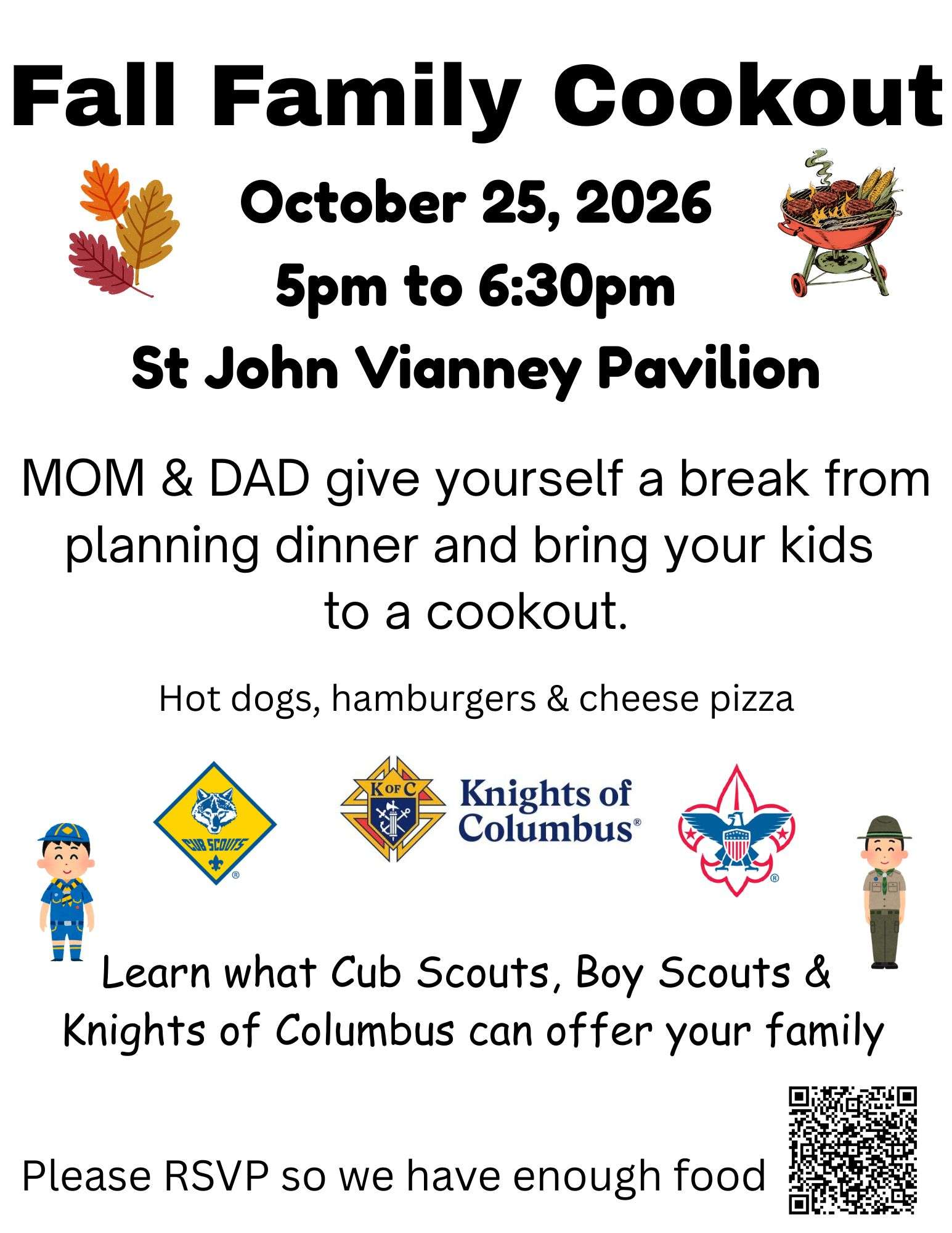
25 - 5 pm Family barbeque, pavilion
31/Nov 1 - Box of Joy Return Collection
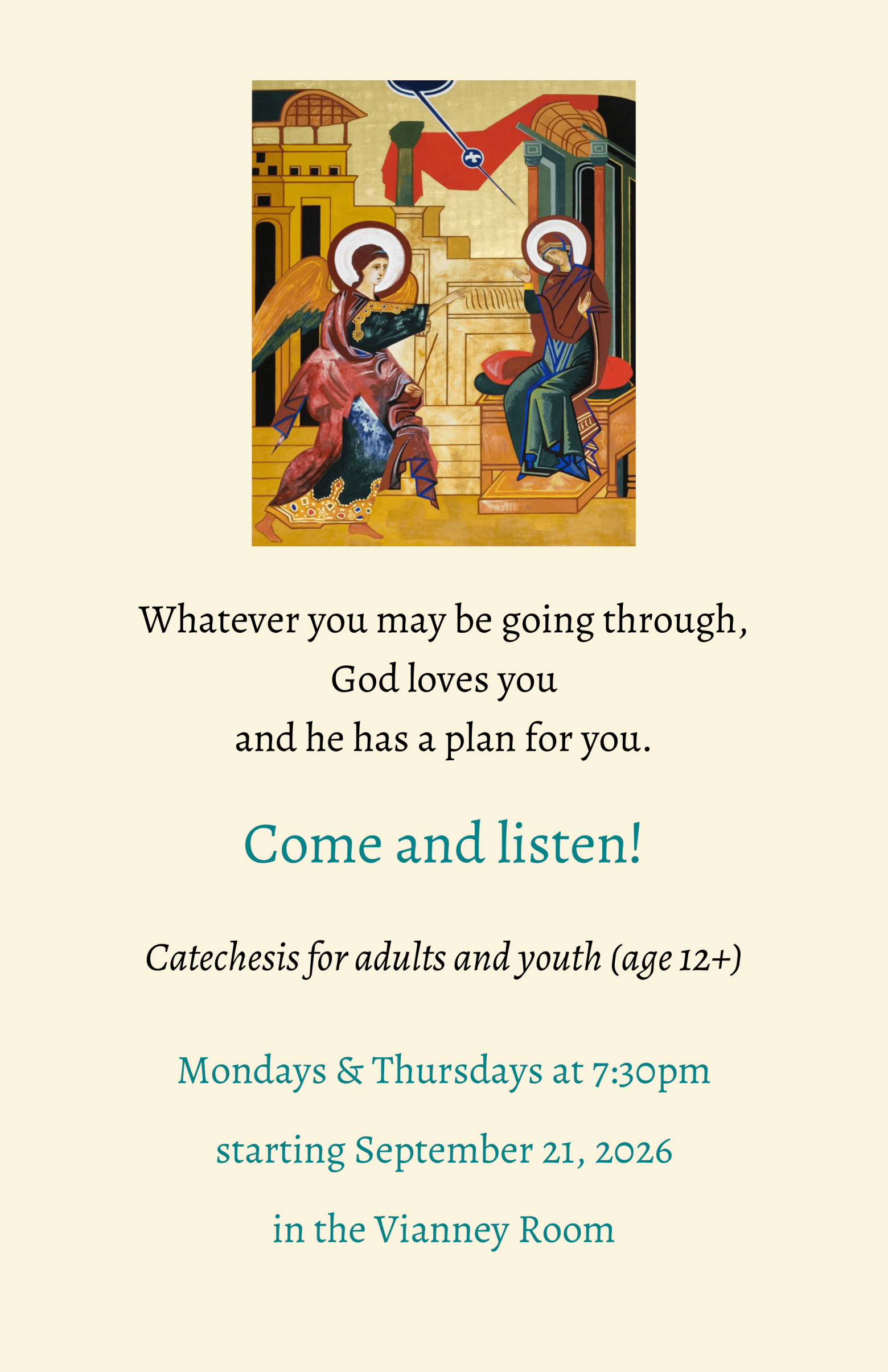
In the catechesis this week on Monday and Thursday evening, we are looking at two fundamental questions that St. John Paul II used to say every single one of us must give an answer to in our life: “Who is God?” and “Who am I?”
When you ask someone “Who is God?” they usually start with abstract concepts like the Eternal, the All-Powerful, the Creator. They might go with something slightly more personal like Loving or Merciful. When you follow up – “But who is God for YOU, in your life?” – a religious person will say “God is everything to me.” Maybe it’s true. It’s true for the saints, anyway. But it’s also so vague as to be almost meaningless.
So we take some examples from the Bible. If you asked Abraham who God is, he wouldn’t answer with concepts, but with facts. God is the one who gave me what I always longed for: my son Isaac, and this land of Canaan. He would answer with history, his experience of God. If you asked one of the Hebrews from the time of the Exodus, they would tell the Haggadah, the story of how God rescued us from slavery in Egypt. We recount this story every year at the Passover in order to transmit faith to the children, to say who God is not with concepts but with facts.
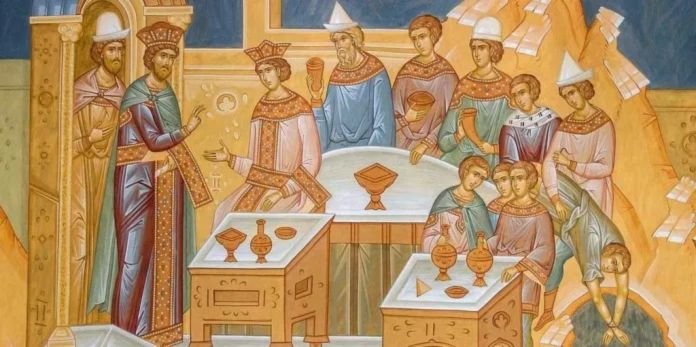
Each of us has our own Haggadah, our own history of salvation that God is working in our life. But how often do I tell it? How well can I even recognize it? In the Gospel this Sunday, the King is inviting us to a feast, but so many times we are too busy with our business, our farm, the million things going on in our life. We ignore the invitation. There is a banquet waiting for us! We have only to show up, put on the white garment of our baptism, and enter into the feast.
En la catequesis de esta semana, los lunes y jueves por la tarde, abordamos dos preguntas fundamentales a las que, según san Juan Pablo II, cada uno de nosotros debe dar respuesta en la vida: «¿Quién es Dios?» y «¿Quién soy yo?».
Cuando se le pregunta a alguien «¿Quién es Dios?», usualmente comienza con conceptos abstractos como el Eterno, el Todopoderoso o el Creador. Quizás mencione algo un poco más personal, como que es Amoroso o Misericordioso. Si se profundiza en la pregunta —«Pero ¿quién es Dios para TI, en tu vida?»—, una persona religiosa dirá: «Dios es todo para mí». Tal vez sea cierto; al menos lo es para los santos. Pero también es tan vaga que es casi vacío.
Entonces miramos unos ejemplos de la Biblia. Si le preguntaras a Abrahán quién es Dios, no respondería con conceptos, sino con hechos. Dios es quien me dio lo que siempre anhelé: mi hijo Isaac y esta tierra de Canaán. Respondería con la historia, con su experiencia de Dios. Si se lo preguntaras a un hebreo que vivía el Éxodo, te contaría la “Hagadá”: el relato de cómo Dios nos rescató de la esclavitud en Egipto. Contamos esta historia cada año durante la Pascua para transmitir la fe a los niños, para expresar quién es Dios no en conceptos, sino hechos.
Cada uno de nosotros tiene su propia “Hagadá”, su propia historia de salvación que Dios está obrando en nuestra vida. Pero ¿con qué frecuencia la cuento? ¿Reconozco la obra de Dios en mi historia? En el Evangelio de este domingo, el Rey nos invita a un banquete; pero muchas veces estamos tan ocupados con nuestros negocios, nuestras tierras y el millón de cosas que suceden en nuestra vida. Ignoramos la invitación. ¡Hay un banquete esperándonos! Solo tenemos que acudir, revestirnos con la túnica blanca de nuestro bautismo y entrar en la fiesta.
Dear Saint Peter’s community, (also asked to be shared with SJV)
I hope you all had a blessed and nice summer. Thank you for your continuing prayers for my health. When you tell me “I’m praying for you” it means a lot to me on my journey with chronic illness. It is because of God, your prayers and support, and a great medical team that I continue in ministry as your pastor.
I am writing to inform you that I need to have one to two more surgeries. For two years my SI (sacroiliac) joints (which connect the spine to the pelvis) have degenerated causing acute and radiating pain. Until a few months ago, periodic steroid injections made the condition manageable. The injections are no longer working.
On Monday, October 26, 2026, I will have fusion surgery on my left SI joint at the Hospital for Special Surgery in Manhattan. Thankfully it should be minimally invasive, so the length of the procedure and the initial recovery is shorter than my prior surgeries. I expect to gradually return to ministry two weeks after the surgery. (There is a small chance that once they are in the joint, if damage is more extensive than tests have shown, it could be a more invasive procedure.) In the months following the procedure, bone will grow in the joint to form complete fusion of the joint. If the outcome is successful, I will then have fusion surgery on my right SI joint.
While facing more surgery is another part of my cross that I would rather not face again, I count the many blessings that have come to fruition because of my cross. I trust in God that it all has purpose and that He has allowed me to help others through my priestly ministry, especially with people who are dealing with their own cross they carry in their journey of life.
Every day I give thanks for our thriving and blessed community. I thank you for your support of Saint Peter’s parish and school and your support of each other as brothers and sisters in Christ. Please keep me in your prayers and know of my prayers for you. May God continue to pour His blessings upon us.
Yours in Christ,
Reverend Daniel B. Carson
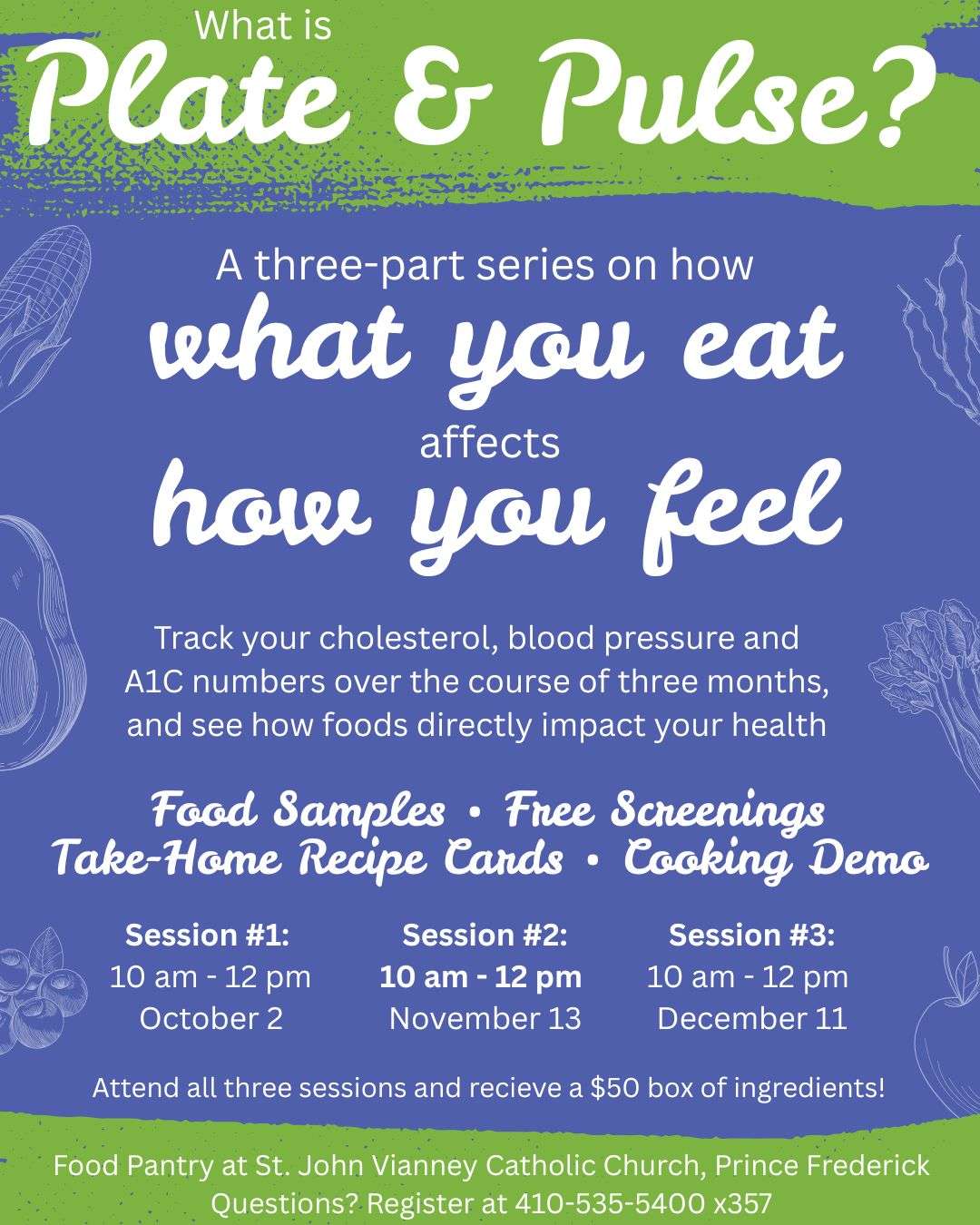
Meeting in Church Library.
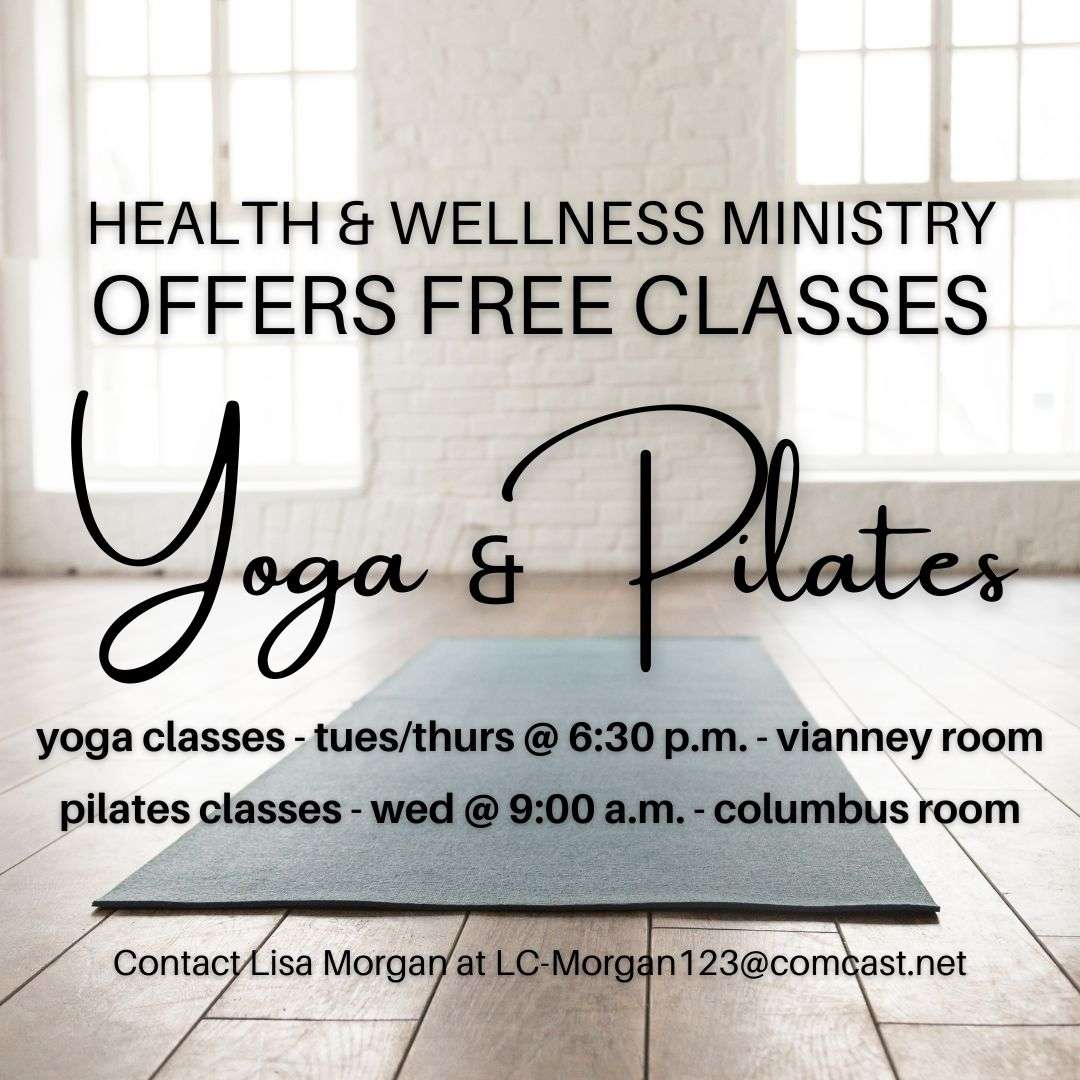
HEALTH & WELLNESS
Resources for end of life, caregivers, exercise programs, etc. are on our website.
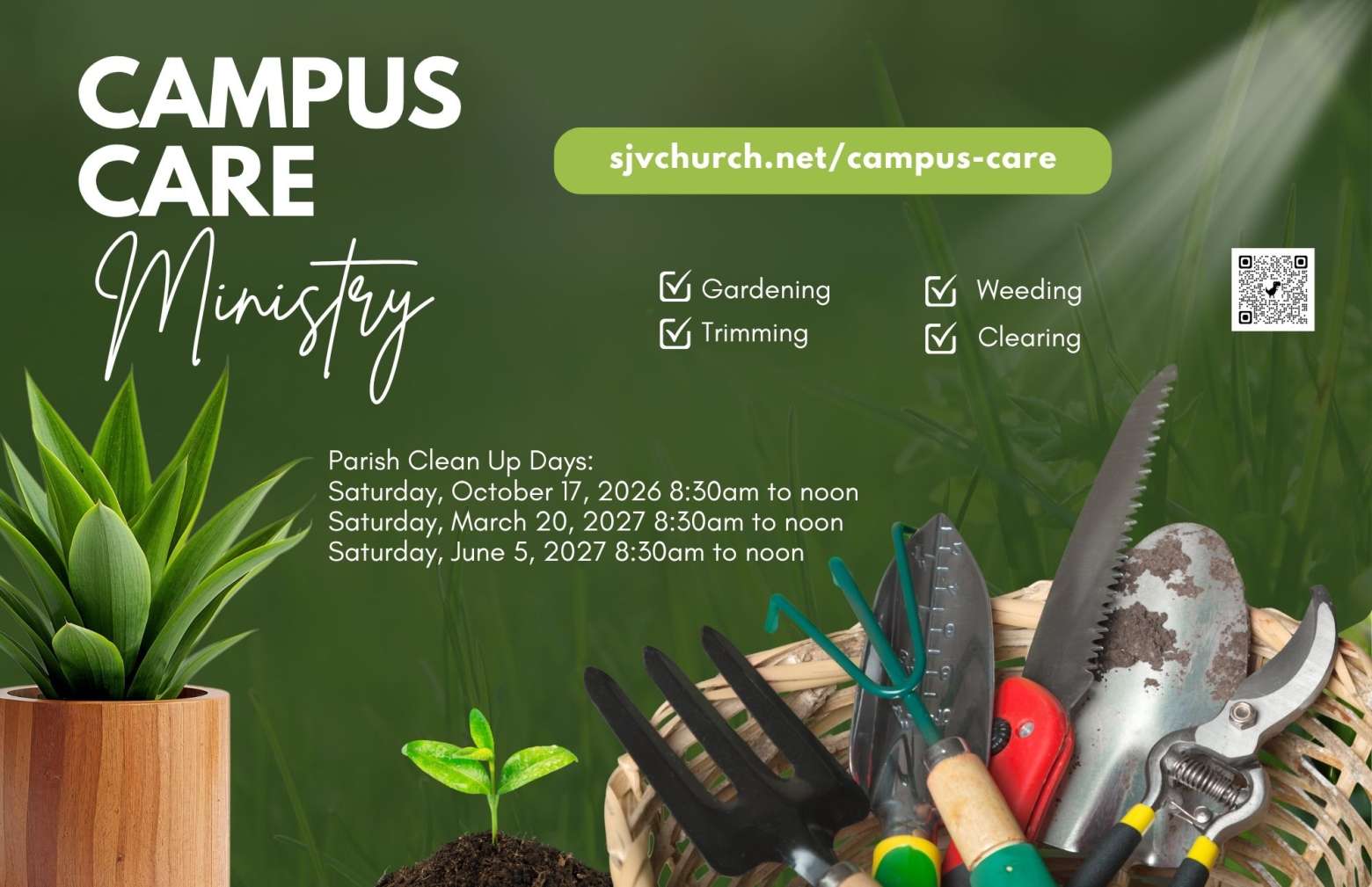
Campus Care this month!!
But in the meantime, open our flyer to see a running list of ongoing, ever changing tasks to tithe a talent!
Sign Up with flocknote to receive our weekly email, ministry group messages such as Prayer Warriors, CYBL, Men’s Group, Food Pantry, and more!
Please encourage your pew neighbor~ Tap/Share email or text: Logo is Linked!
Please encourage your pew neighbor~ Tap/Share email or text: Logo is Linked!


Parish Office: office@sjvchurch.net Parish Phone: (410) 535-0223
Parish Office Hours:
Monday - Thursday: 9:00 - 3:00
Friday: 9:00 - 12:00



SJV Bulletins
Parish Staff
Parish Secretary: Anne Hilker | office@sjvchurch.net
Bookkeeper: Tamara Sapp | bookkeeper@sjvchurch.net
DRE/Child Protection: Kimberly Stack | CCD@sjvchurch.net
Family Life Center: Cheryl Hee | FLC@sjvchurch.net
Preschool: Karen Van Duzer | Preschool@sjvchurch.net
Music Coordinator: Mila Arness | music@sjvchurch.net
Maintenance: Thomas Voegtli | maintenance@sjvchurch.net
Liturgical Ministries
Altar Servers: Jonathan Barbour
EMHC:
Adoration: Ella Ennis
Lectors: Donna Wallmark
Ushers: Steve Pedone
Weddings: Jan Pedone
Parish Life Ministries
Hispanic Ministry:
Arimatheans: Leslie Collica
God’s Gifts Shop:
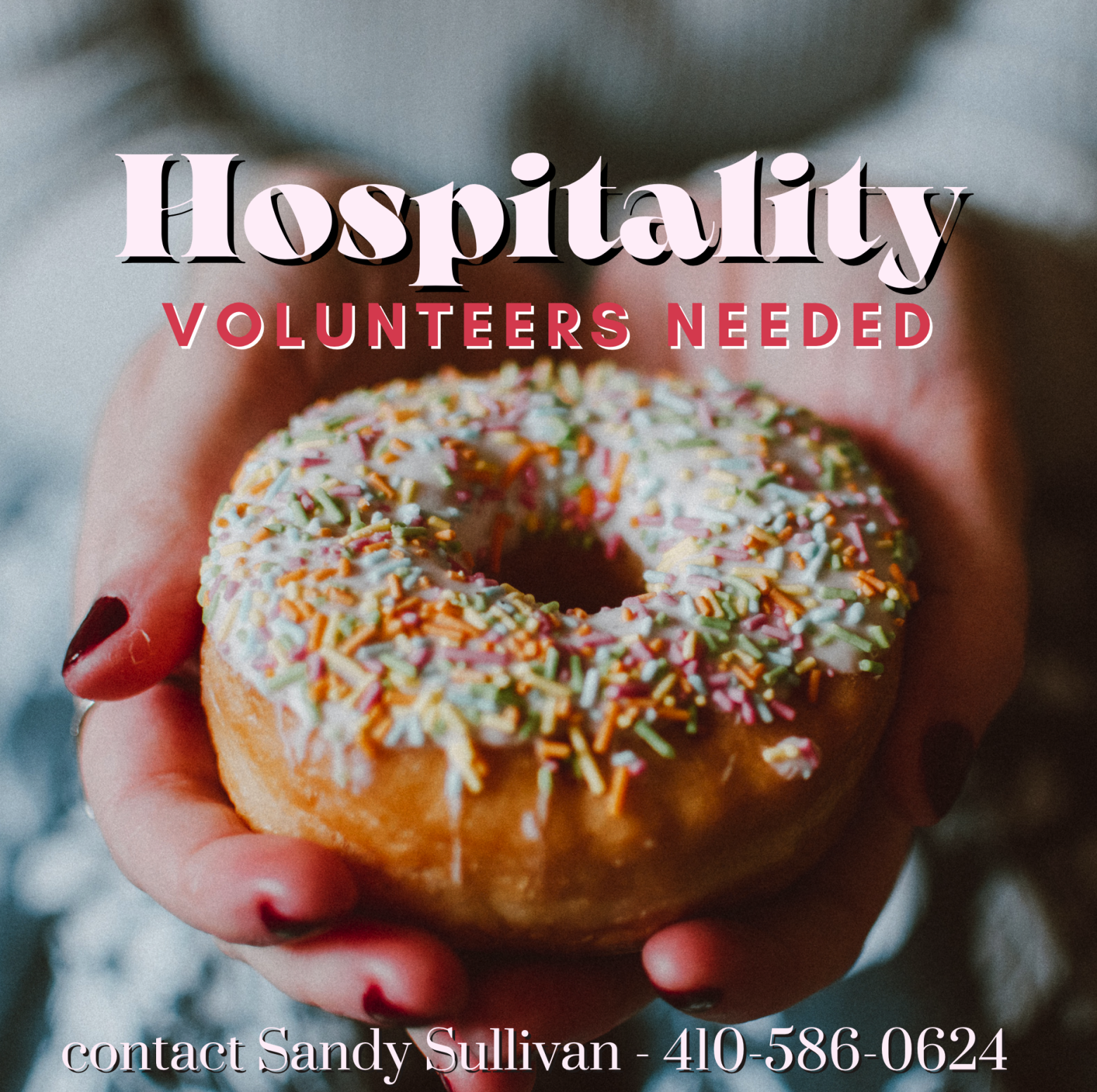
Hospitality: Sandy Sullivan
Knights of Columbus GK: Rob Gionfriddo
Men’s Club:
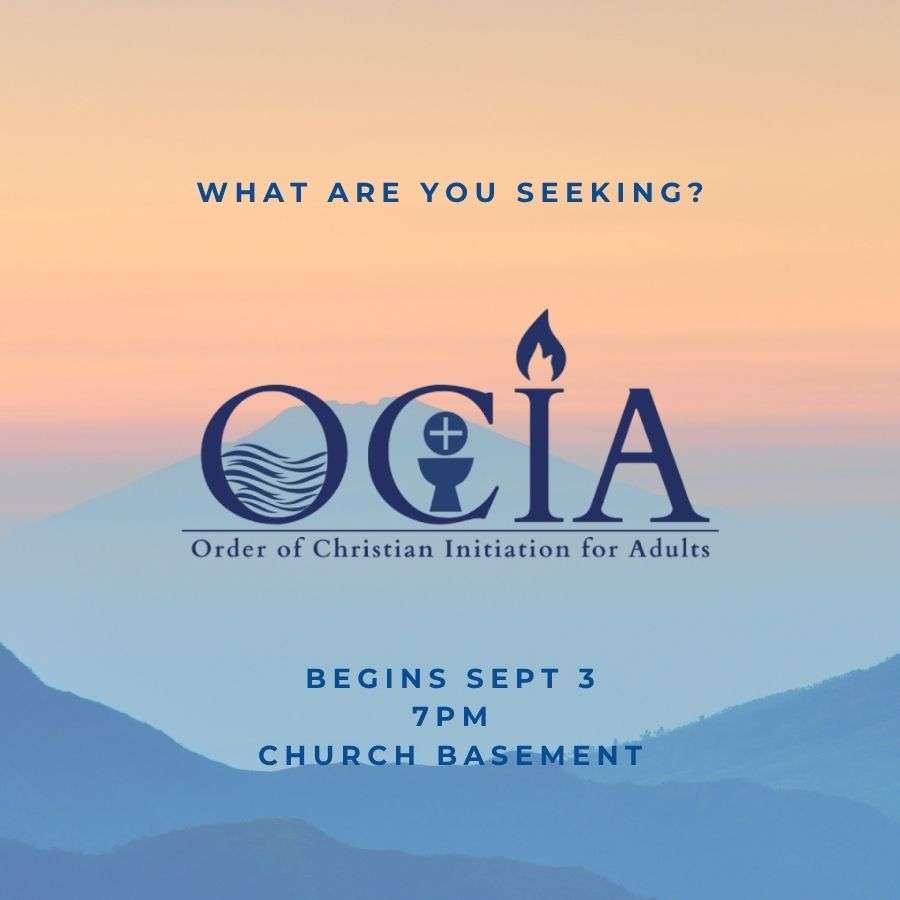
OCIA: Jeremy Woollen
Scouts: Christopher Lusby
Videography: Scott Vogan
Faith in Action Ministries
AA: MWF Noon - 1:00 pm / Tu 7:00 - 8:00 pm
Cursillo/Ultreya: Ginger Caldwell
Food Pantry: Larry Donnelly
Spiritual Direction & Accompaniment:
Dcn. Jim | DeaconJim@sjvchurch.net
Cheryl Pilkington | soul2listen@comcast.net
Health & Wellness: Dr. Joe Tiralla
Hospital Ministry: Dcn. Joe Mills
Parish Vocations: Dcn. Jim Caldwell
Prison Ministry: Don Mueller
Racial Justice: Ginger Caldwell | RacialJusticeSJV@gmail.com
Safe Nights: Bob & Mary Wassmann